- Why Omnichannel Matters Now for FMCG in MENA
- The Shift in Shopper Behavior
- What's Broken: The Current State
- The Opportunity
- Mapping the Modern MENA Shopper Journey
- Key Channels to Integrate
- Offline Retail (Hypermarkets & Supermarkets)
- Brand Websites & E-Commerce
- Marketplaces (Amazon.sa, Noon, Nana, etc.)
- Social Commerce (Instagram, TikTok, WhatsApp)
- What Needs to Connect
- Unified Product Availability
- Seamless Promotions & Pricing
- Shared Shopper Identity & Loyalty
- Role of Retail Media in KSA & UAE
- Data Unification: CDP/CRM, First-Party Data, Consent
- Why First-Party Data Is the New Competitive Edge
- Building the Tech Stack
- Consent & Privacy in MENA
- Personalization at Scale
- Smart Triggers and Loyalty Nudges
- Behavioral Segmentation in FMCG
- Linking Content + Commerce
- Measurement Frameworks for Modern FMCG
- The Metrics That Matter
- Basic Attribution Approaches
- Why Shared Dashboards Matter
- How Lamana Builds Omnichannel Loyalty for FMCG Brands
- Our Strategic Approach
- Step 1: Shopper Journey Mapping
- Step 2: Data & Tech Audits
- Step 3: Experience Design (UX + CRM + Loyalty + Media)
- Tools & Integrations We Work With
- Sample Results
- Loyalty Is Engineered, Not Earned by Accident
Across the Middle East and North Africa, today’s shoppers are everywhere, browsing online, visiting hypermarkets, scrolling through TikTok, and jumping between apps and in-store aisles in a single purchase journey. For FMCG brands, this creates both a vast opportunity and growing complexity. The old playbook of mass communication no longer works. Modern consumers expect brands to recognize, reward, and remember them across every touchpoint.
In such a fragmented landscape, inconsistency comes at a high price: loyalty. If your shopper can’t identify your brand from one channel to the next, why would they choose to stay?
This evolution is prompting MENA’s leading FMCG marketers to rethink and reassess not only where they connect with consumers, but also how they measure what truly matters. Clicks and impressions can’t capture long-term value. Siloed dashboards can’t guide cross-functional decisions. And short-term wins rarely translate into enduring relationships.
The brands that succeed today are those that move beyond campaign metrics, optimizing every step of the shopper journey, from first awareness to repeat purchase. They align around shared KPIs, connect their tools and data, and keep customer-centric thinking at the forefront.
Why Omnichannel Matters Now for FMCG in MENA
Omnichannel matters now because MENA shoppers no longer follow a straight path to purchase. They live in a blended world of screens and shelves. In the UAE, shopping starts on mobile, often inspired by social media. In Saudi Arabia, purchase decisions are usually made on phones, even when the final purchase occurs in-store.
Egyptian shoppers prioritize value, mixing online research with offline deals. Yet most FMCG brands still struggle with inconsistent promotions, disconnected CRM systems, and a reliance on retailer data. The opportunity lies in owning the shopper relationship, building loyalty through unified, data-driven experiences that merge retail reach with personalized engagement across every touchpoint.
The Shift in Shopper Behavior
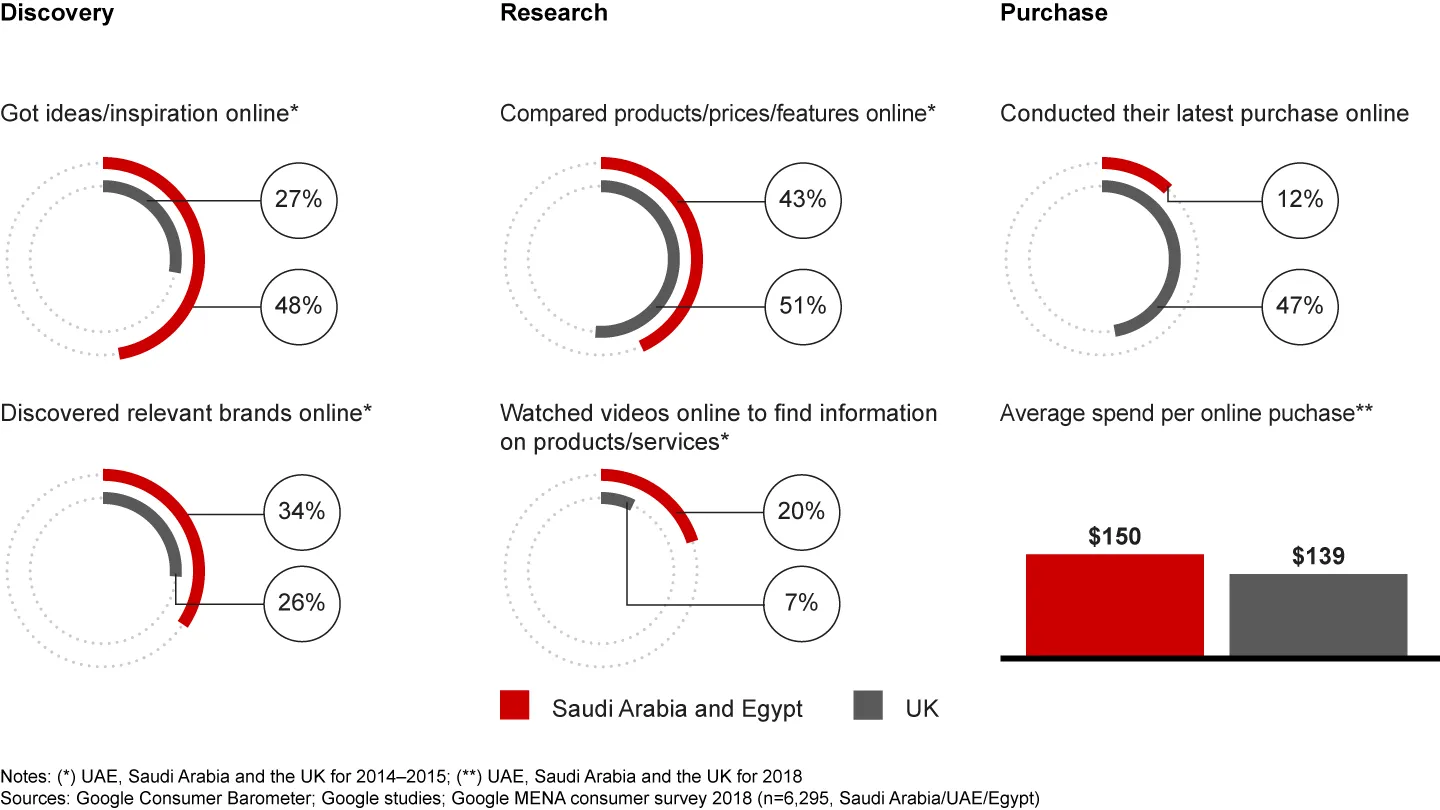
Shoppers in the Middle East and North Africa are among the most digital in the world. According to Bain & Company, nearly half of consumers in the UAE and Saudi Arabia discover new products online, almost double the share in mature markets such as the UK. Smartphone use dominates every stage of the journey. In the UAE, internet penetration exceeds 99%, and more than half of total retail spending now occurs online. A 2025 survey cited by Times of India found that 67% of UAE consumers made their most recent purchase via smartphone, the highest globally. In Saudi Arabia, the figure stands at 66%, and approximately 70% of shopping-related searches originate from mobile devices.
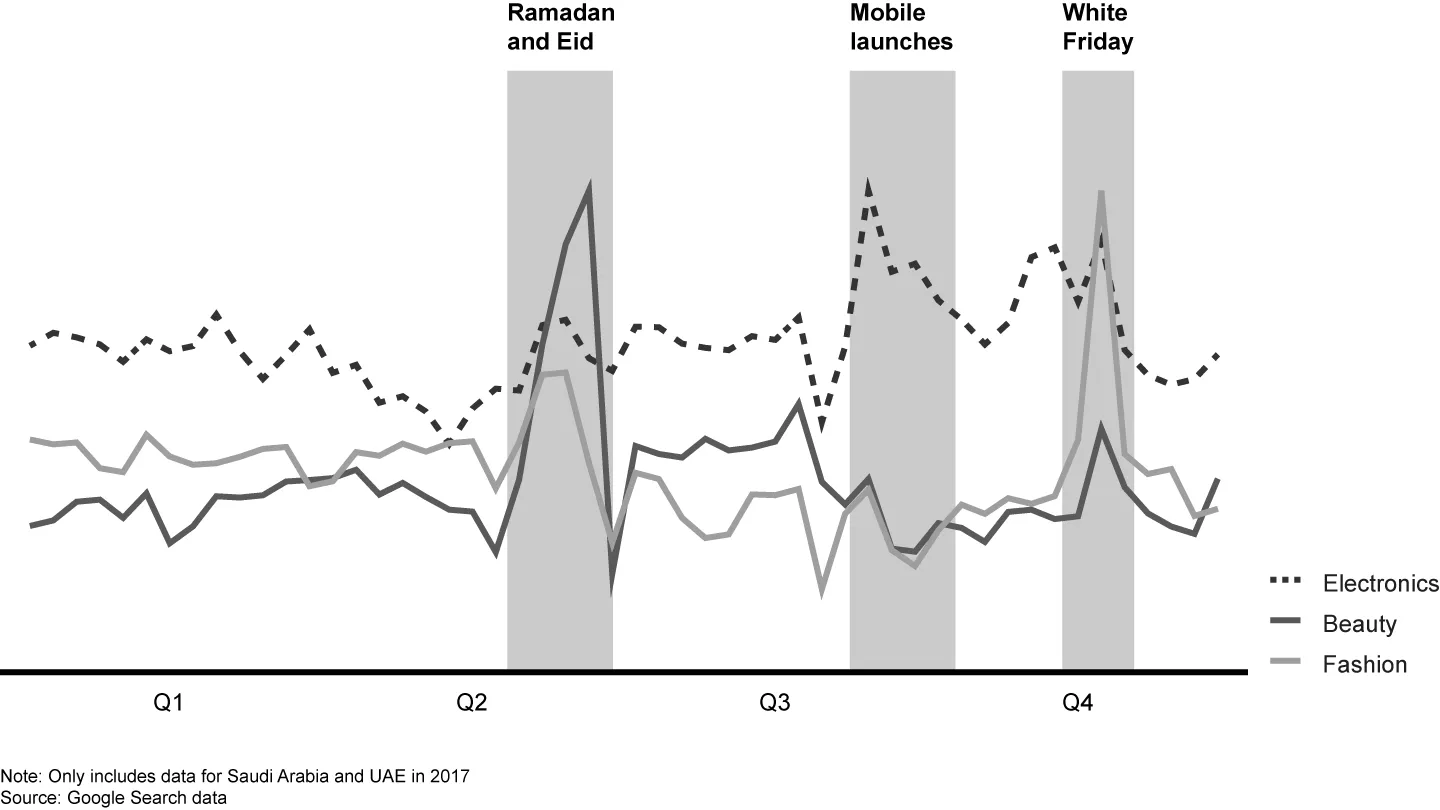
These habits show how the smartphone has become the command center of shopping decisions, from discovering products on Instagram to comparing prices in-store through mobile apps. In contrast, Egyptian consumers have been slower to adopt online shopping, but they exhibit strong value-driven behavior. With inflation pushing careful planning, Business Monthly Egypt reports that 73% of Egyptian shoppers now pre-plan purchases and prioritize the lowest unit price. Loyalty in Egypt is linked closely to value; brands that fail to offer affordability or relevance lose shoppers quickly.
At the regional level, the hybrid shopping journey is now the norm. Research by Khaleej Times indicates that 87% of GCC shoppers combine online and offline channels before making a purchase. A consumer might see a new product in a TikTok video, test it in a mall, then buy it later on Noon or Amazon. The reverse is equally standard. Bain & Company’s MENA study highlights that 48% of consumers in the UAE and KSA obtain product ideas online before entering a store. YouTube and Instagram are major discovery engines. Half of Saudi shoppers say YouTube helped them find new brands. In Egypt, 72% of users use search engines and social platforms to research products.
What's Broken: The Current State
Despite the clear omnichannel behavior of MENA shoppers, many FMCG brands still operate in silos. Promotions often vary between e-commerce sites and physical stores, confusing customers and eroding trust. SoftServe Business Solutions notes that fragmented promotional data systems continue to be a major barrier. Without a single source of truth, marketers struggle to measure uplift or coordinate timing.
The lack of a unified CRM is another main point. Historically, FMCG brands relied on retailers to own the shopper relationship. As a result, direct consumer data is limited or missing entirely. A buyer who purchases in-store and later makes an online purchase is treated as two separate individuals. This creates broken experiences, irrelevant ads, generic emails, and lost opportunities for loyalty.
An additional gap lies in linking media spend to retail outcomes. CapillaryTech states that Digital ad spending in MENA reached USD 5.5 billion in 2022 and is expected to quadruple by 2024. Yet most brands cannot tie impressions to actual sales. Without a live data loop between retailer POS systems and brand dashboards, marketing optimization is largely a matter of guesswork.
Retailers now monetize this gap by offering retail-media networks, selling ad placements to FMCG brands. While this provides new targeting options, it reinforces dependence on retailer data. The result is a patchwork of uncoordinated promotions, disconnected CRMs, and unlinked measurement systems, a costly obstacle to loyalty building.
The Opportunity
For MENA’s FMCG marketers, the path forward lies in owning the shopper relationship. That starts with building direct and connected channels, brand websites, apps, loyalty programs, and D2C stores. These platforms generate valuable first-party data that enable smarter personalization. According to Businesswire, the regional loyalty market is expanding rapidly, growing by around 16% annually and projected to reach USD 3.27 billion by 2025. When consumers join a brand’s rewards program or app, every interaction, from in-store purchases to online reorders, feeds into a unified profile through a Customer Data Platform (CDP).
This data foundation makes personalization scalable. Instead of one-size-fits-all campaigns, a brand can send precise offers: a “welcome back” SMS to a lapsed buyer or a Ramadan-specific bundle to loyal customers. Research from Consultancy Middle East shows that personalization based on shopper data significantly improves engagement.
The next frontier is collaboration through retail media networks (RMNs). McKinsey highlights that regional grocers and marketplaces are rapidly adopting data-driven advertising models. A beverage brand, for instance, might pair a mass-reach TV campaign with a targeted Carrefour app offer, bridging emotional awareness and direct sales. This mix of scale and precision closes the loop between brand media and retail performance.
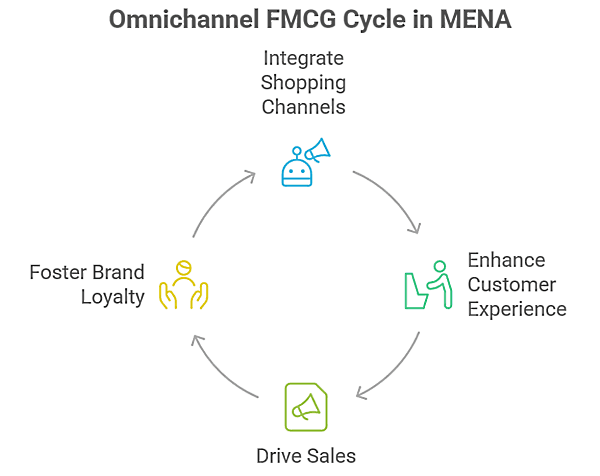
Ultimately, loyalty in the MENA FMCG market will stem from effective orchestration. Brands that integrate owned channels, leverage retail media partnerships, and unify data across touchpoints will convert transactional buyers into long-term advocates.
Mapping the Modern MENA Shopper Journey
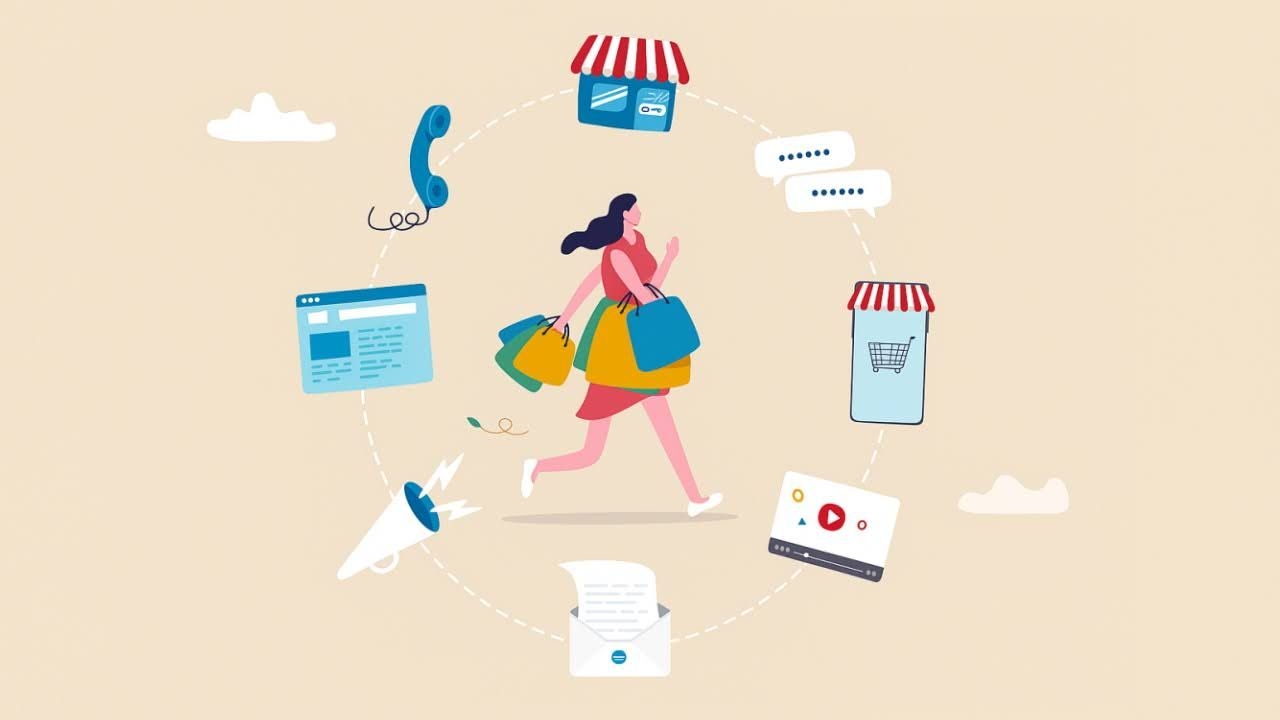
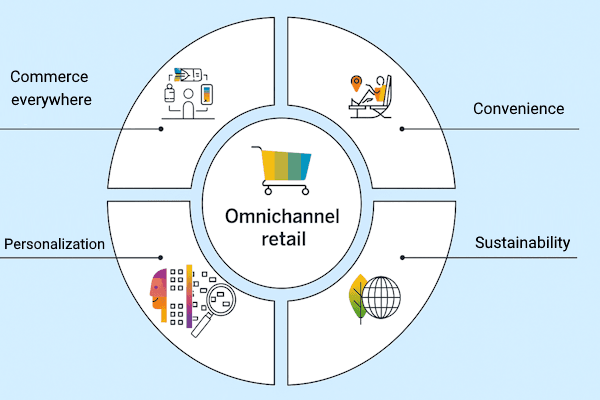
MENA shoppers move fluidly between shelves and screens, discovering products on social media, comparing them on marketplaces, and buying in-store or via apps. To stay relevant, FMCG brands must unify these touchpoints with consistent offers, connected data, and retail media that link awareness to purchase, turning fragmented moments into one seamless journey.
Key Channels to Integrate
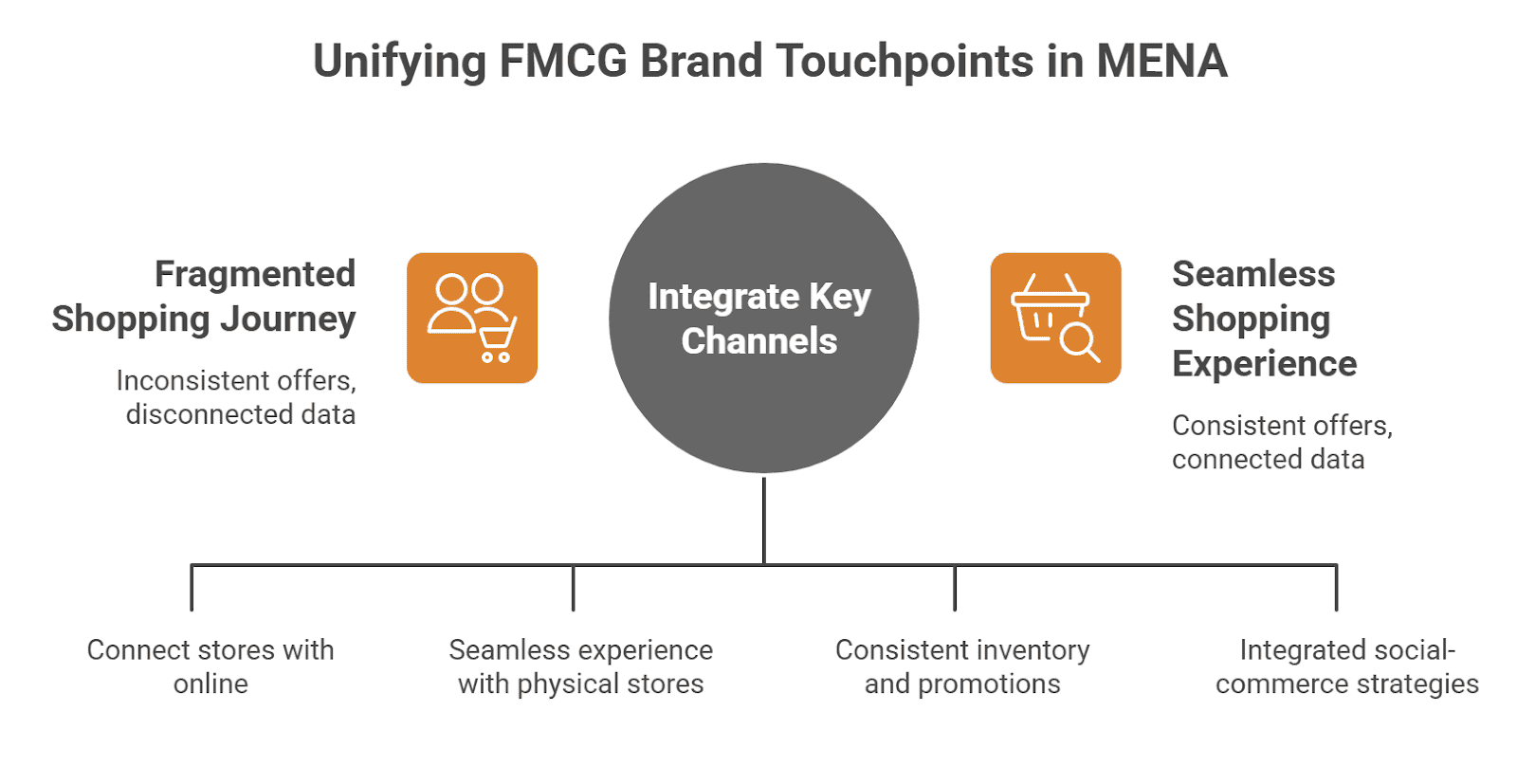
Before diving into specific channels, it’s important to recognize that MENA shoppers navigate a highly blended retail landscape. Successful FMCG brands must integrate offline and online touchpoints, ensuring a consistent and seamless experience whether customers are browsing in-store, shopping on a brand website, or using an e-commerce platform. This unified approach turns fragmented interactions into a cohesive journey that drives both engagement and loyalty.
Offline Retail (Hypermarkets & Supermarkets)
Brick-and-mortar stores remain central to the MENA shopping experience. Traditional retail remains dominant in markets like the UAE. Major chains such as Carrefour, Lulu, Panda, and Spinneys attract the highest foot traffic, particularly in Saudi Arabia. Shoppers still rely on physical stores for groceries and daily essentials, making offline integration essential for any modern FMCG strategy.
Brand Websites & E-Commerce
Consumers increasingly combine offline visits with online channels for greater convenience. Retailers like Carrefour and Lulu operate e-commerce platforms and apps that complement their physical stores. Oliver Wyman reports that 56% of UAE consumers and 33% of Saudi shoppers now mix online and offline journeys. Brand-owned e-commerce platforms enable home delivery, click-and-collect, and exclusive online assortments, which should align seamlessly with in-store experiences.
Marketplaces (Amazon.sa, Noon, Nana, etc.)
Online marketplaces are main touchpoints across MENA. Amazon (which acquired Souq.com) attracts over 20 million monthly visits in Saudi Arabia and the UAE, while Noon draws around 15 million, according to Anchanto. Grocery-focused platforms like Nana Direct connect shoppers to local supermarket inventory via apps and delivery networks; Nana has partnered with Panda and Carrefour to become Saudi Arabia’s leading online grocery marketplace. Consistent products and promotions across marketplaces and brand-owned channels are critical to stop fragmented experiences.
Social Commerce (Instagram, TikTok, WhatsApp)
Social platforms are emerging as powerful discovery and purchase channels. Anchanto reports that nearly 99% of UAE residents and 82% in KSA are active on social media. Instagram Shops and TikTok Shopping enable in-app catalog browsing, impulse purchases, and live commerce.
For example, TikTok Advertising Campaign Now showcases how FMCG brands in the region use short-form videos and creator content to inspire discovery and drive omnichannel sales.

Arab News reports that 77% of MENA consumers discover new products on TikTok, with over half making impulse buys after watching content. Even messaging apps like WhatsApp facilitate transactions. RedSeer notes that social media influences around 30% of MENA’s retail market, underscoring the need for integrated social-commerce strategies.
What Needs to Connect
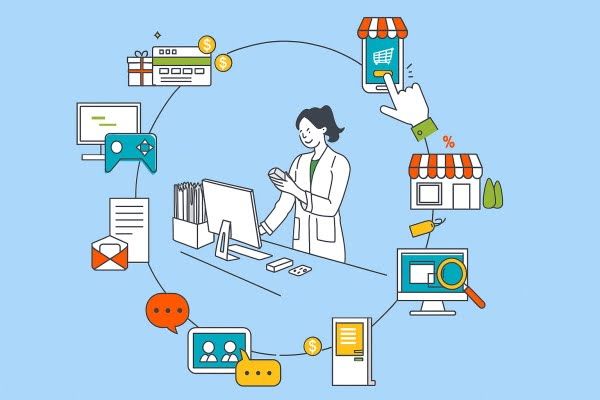
FMCG brands must connect their systems so that inventory, pricing, and shopper data stay aligned across every channel. When customers see the same offer in-store, on an app, or on a website, it builds trust and consistency. Tools like Carrefour’s Precision Media, which combine in-store insights with digital behavior, help brands create smoother, more personalized experiences that drive both loyalty and sales.
Unified Product Availability
Shoppers expect real-time visibility of product availability across channels. Omniful.ai ensures that integrating POS systems with online platforms allows in-store sales to update inventory online instantly. Using store stockrooms for fulfillment enables click-and-collect or ship-from-store services, maintaining a consistent assortment and availability across channels.
Seamless Promotions & Pricing
Promotions, bundles, and prices must be consistent across offline and online channels. Real-time sync prevents situations where a discount ends online but continues in-store. Loyalty points and vouchers should also work interchangeably, enabling a single, coherent shopping experience.
Shared Shopper Identity & Loyalty
Creating a unified customer view allows personalization and cross-channel loyalty. Linking in-store transactions with online profiles via email, phone number, or loyalty ID enables a 360° shopper view. This integration supports personalized offers, returns across channels, and consistent rewards, ensuring shoppers feel recognized and valued everywhere.
Role of Retail Media in KSA & UAE
Retail media networks are reshaping how FMCG brands connect with shoppers across channels. In the UAE and Saudi Arabia, Majid Al Futtaim’s Precision Media - Carrefour’s retail media platform - blends in-store insights with online audience data. Using AI, it identifies shopper groups inside stores and serves them coordinated ads across digital platforms, linking the physical and digital journey.
In UAE Carrefour stores, digital screens and smart shelves display tailored promotions in real time, powered by AI and 3D sensors. These in-store impressions are connected to online profiles, allowing seamless retargeting. A shopper browsing baby products on the app, for example, may later see related promotions on in-store screens. Retail media campaigns are booked programmatically and tracked across both online and offline channels, creating measurable impact and enabling ROI comparable to traditional digital ads.
The trend highlights the growing importance of connecting all touchpoints (social, online, in-store, and app-based) into a unified omnichannel ecosystem that drives engagement, conversion, and loyalty.
Data Unification: CDP/CRM, First-Party Data, Consent
Winning in MENA’s FMCG market depends on owning shopper data. A unified CDP or CRM connects purchase, loyalty, and engagement data into a single view, enabling smarter targeting and retention. As third-party cookies fade, first-party and consent-based data become vital for personalization and compliance. Brands that build transparent, value-driven data exchange, like offering rewards for sign-ups, gain both trust and long-term growth.
Why First-Party Data Is the New Competitive Edge
The marketing landscape is shifting rapidly from third-party to first-party (and zero-party) data. Privacy-driven changes, like Apple’s iOS 14 tracking limits and Google’s phase-out of third-party cookies, have made audience rental through ad platforms increasingly costly. Meta ad costs have risen about 30% year-over-year due to reduced targeting precision, while Google Ads ROAS fell by around 20% in early 2024.
First-party data, which is the information brands collect directly from customers via their websites, apps, or CRM systems, is now a strategic advantage. Unlike third-party data, it is proprietary and obtained with consent. Zero-party data, where customers intentionally share preferences, is equally valuable for personalization. Owning this data reduces dependence on paid ads and improves ROI. Brands that cultivate their own audience through email lists, SMS opt-ins, or loyalty programs can drive repeat sales more efficiently than those continually reacquiring customers via paid channels.
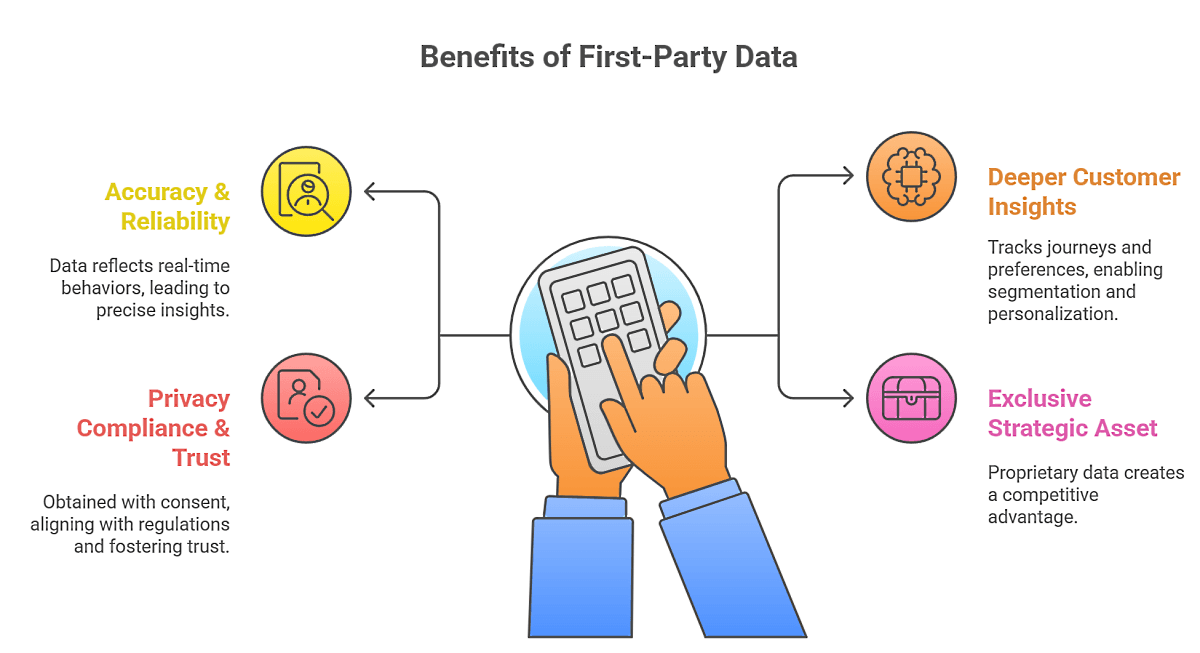
- Accuracy & Reliability: Directly captured data reflects real-time behaviors (purchases, browsing, and app usage), leading to precise insights.
- Deeper Customer Insights: First-party data tracks journeys and preferences, enabling segmentation and predictive personalization.
- Privacy Compliance & Trust: Obtained with consent, it aligns with GDPR, CCPA, and regional regulations, fostering customer trust.
- Exclusive Strategic Asset: Proprietary data creates a competitive moat; competitors cannot access your insights.
Building the Tech Stack
To activate first-party data effectively, brands need a unified technology stack.
- Customer Data Platform (CDP): Aggregates data from websites, apps, POS, social media, CRM, and email into a single shopper profile. Identity resolution ties interactions to one individual, creating a 360° view. Unlike traditional CRM, CDPs handle large, real-time event-level data and enable omnichannel personalization at scale.
A strong example is Lamana’s “When Saffron Built Its Own Media” project, which unified e-commerce, content, and CRM into a single ecosystem for an Iranian saffron brand. By integrating first-party data and localized storytelling, the brand increased its repeat orders by 27% and built an owned media platform that reduced its dependence on retailers.
- Integrated CRM & Messaging: CRMs manage interactions and communications. Syncing with e-commerce platforms and messaging apps like WhatsApp ensures all touchpoints are captured. Chat conversations, purchases, and browsing behavior feed unified profiles, allowing consistent personalization across channels.
Data Capture Across Touchpoints:
- POS: In-store transactions linked to customer profiles via loyalty IDs or phone numbers.
- Mobile App: Tracks behaviors like product views, wishlist adds, and barcode scans.
- Loyalty Programs: Points, rewards, and tier changes feed into the central profile, revealing lifetime value and brand affinity.
- Web & E-commerce: Analytics and event tracking capture visits, clicks, and purchases.
- Social & Other Channels: Social logins, ad clicks, and engagement, plus email and call center interactions, are integrated for a full picture.
Consent & Privacy in MENA
MENA consumers increasingly expect personalization but demand control over their data. Nearly half of marketing leaders report consent-related challenges in using personal data. Brands must earn the right to personalize through transparency and value exchange.
Principles for Consent-Driven Personalization include:
- Transparency: Clearly communicate what data is collected and why. The example is “Share your birthday to receive a personalized birthday discount.”
- Value Exchange: Customers share data when they see tangible benefits, such as discounts, loyalty points, early access, or personalized content. Over 70% of consumers are willing to share data for meaningful personalization.
MENA regulators are implementing privacy laws (Saudi PDPL, UAE, Egypt), making consent and data control legally required. Leading brands treat privacy as a differentiator, offering self-serve privacy dashboards and clearly communicating opt-in benefits. Messaging that reminds customers of their choices reinforces trust, e.g., “You’re receiving this update because you indicated interest in sneakers, update preferences anytime.”
When done right, first-party data strategies enable personalized, AI-driven marketing that respects consent. Customers feel understood without being exploited, fostering loyalty and long-term engagement. In MENA, transparent, value-driven data practices are the foundation for sustainable personalization and competitive advantage.

Personalization at Scale
Personalization at scale lets FMCG brands turn mass audiences into individual relationships. By using AI and data from CDPs, brands can trigger timely offers, reminders, or bundles that match each shopper’s habits. From WhatsApp nudges to personalized recipes, every message feels relevant. This approach drives repeat purchases and loyalty without overwhelming consumers with generic promotions.
Smart Triggers and Loyalty Nudges
Modern personalization relies on smart triggers, automated, data-driven prompts that engage customers at precisely the right moment. AI predicts individual behaviors, then serves timely offers or reminders that feel intuitive rather than intrusive.
For example, Zalando uses AI to forecast a shopper’s next purchase and suggests contextual bundles of complementary items. Similarly, e-commerce systems can send reminders for recurring purchases, like household staples, sometimes including small, targeted discounts for items a customer frequently browses but hasn’t bought yet.
Another example is Lamana's “Mogu Mogu, When Cheeks Puff Up!” campaign that showed how smart triggers can transform impulse moments into loyalty. Using data from social interactions and purchase patterns, the campaign linked playful, emoji-style content to personalized offers on delivery apps. This approach drove double-digit repeat purchase growth and turned a fun beverage into a recognizable digital personality across channels.
These triggers span channels: push notifications, WhatsApp messages, or in-app alerts can re-engage customers at optimal times. WhatsApp, in particular, is being used to send abandoned-cart reminders with personalized offers. The goal is an “always-on” personalization engine, where behavioral triggers and ongoing, bespoke loyalty rewards increase engagement and strengthen customer relationships.
Behavioral Segmentation in FMCG
FMCG brands achieve personalization at scale by segmenting customers by behavior and tailoring campaigns to each group:
- Heavy Users: Frequent buyers who are loyal to the brand. Reward them with VIP perks, early access to products, or exclusive loyalty benefits to deepen engagement. Communications emphasize appreciation and insider advantages.
- Seasonal Shoppers: Customers who purchase around specific occasions, like holidays or school seasons. Timely messaging, bundles, and offers aligned to their shopping periods improve relevance and order value.
- Gift Buyers: Shoppers buying mainly for others respond to gift-focused campaigns, such as curated gift guides, limited editions, or special packaging. For example, “Top 5 Gifts for Mother’s Day” helps these consumers find suitable products without receiving irrelevant personal-use promotions.
- Language & Cultural Segments: Tailoring content to language preference and cultural context boosts engagement. In the Middle East, brands send Arabic content to Arabic-speaking users and English content to others. Beyond translation, culturally relevant messaging shows respect and strengthens connection, increasing response rates.
By aligning messaging to these behavioral patterns (purchase frequency, seasonality, gifting habits, and language), FMCG brands can deliver highly relevant, timely, and effective campaigns. Each segment receives content that resonates, enhancing conversion and loyalty.
Linking Content + Commerce
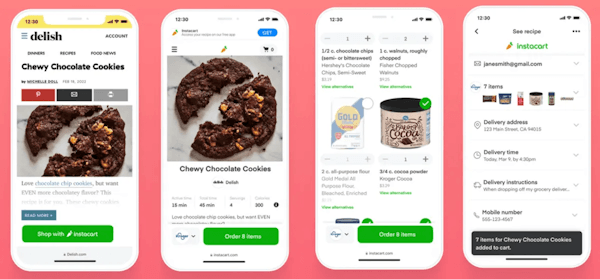
Shoppable content closes the gap between inspiration and purchase. For example, recipe videos, blogs, or social posts can include integrated shopping lists. Instacart and TikTok have partnered to allow viewers to tap a “Shop with Instacart” button on recipe videos, automatically loading ingredients into a cart. This converts immediate interest into a seamless buying experience.
Dynamic landing pages also personalize content based on browsing or purchase history. Returning visitors see recommendations aligned with previous activities, eco-friendly products for those who browsed sustainability items, camera accessories for recent DSLR buyers, or region-specific messaging in the appropriate language. Personalized banners, CTAs, and welcome messages further enhance engagement. First-time visitors might receive a “Welcome! Here’s 10% off” message, while loyal customers see “Welcome back, [Name]!”
By combining shoppable media and dynamic personalization, brands create smooth, frictionless journeys where content drives immediate commerce. This approach increases conversion, satisfaction, and loyalty by making each interaction feel relevant and individual.
Measurement Frameworks for Modern FMCG
Modern FMCG brands must measure what drives growth, not just clicks. Focus on incremental sales, customer lifetime value, and repeat behavior over vanity metrics. Start simple with A/B or geo testing, then evolve toward media mix modeling or CDP-based attribution. Shared dashboards linking media, retail, and CRM ensure all teams track one goal: sustained, measurable business impact.
The Metrics That Matter
In FMCG marketing, the focus should be on business-impact metrics rather than vanity indicators like clicks or page views. Incremental lift analysis, comparing test vs. control groups or pre/post periods, reveals the true sales impact of a campaign. Channels with low surface engagement may still drive meaningful incremental conversions, so eliminating them based solely on clicks can be counterproductive.
Customer Lifetime Value (CLTV) matters more than short-term ROAS. Some campaigns may show smaller immediate gains but bring in loyal, high-value customers who drive long-term profit.
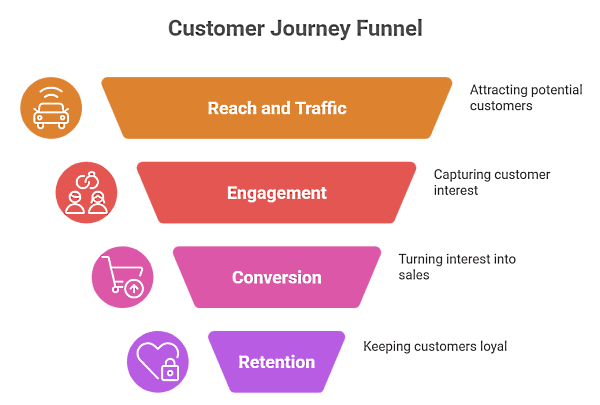
Full-Funnel Metrics track the entire customer journey—from awareness to repeat purchase:
- Top of Funnel: Reach and traffic for brand visibility
- Mid-Funnel: Engagement metrics like click-through rate or time on page
- Conversion Stage: Add-to-cart and checkout completions
- Post-Purchase: Repeat purchases, retention, and churn rates
Basic Attribution Approaches
Begin with simple experiments and move toward advanced models as your data grows.
- A/B Geo Tests: Divide regions into control and test groups, run campaigns only in test areas, and measure the incremental lift.
- Media Mix Modeling (MMM): Examines past sales and media spend to determine each channel’s impact on revenue. This top-down regression approach accounts for online and offline channels, seasonality, and promotions, helping guide long-term budget planning.
- CDP-Enabled Multi-Touch Attribution: By consolidating first-party data in a Customer Data Platform, brands can link cross-device journeys and assign credit across multiple touchpoints. Algorithmic or experimental MTA frameworks provide a more complete view of campaign effectiveness.
Why Shared Dashboards Matter
Data often lives in silos across marketing platforms, POS, e-commerce, and CRM. Shared dashboards centralize data into a single source of truth, aligning media, retail, and CRM teams.
Benefits include:
- Unified Cross-Channel View: Media analytics, retail sales, and CRM metrics are merged connecting ad spend to actual business outcomes.
- Shared KPIs: Co-authored metrics ensure marketing, finance, and CRM teams measure the same outcomes - reach, conversion, loyalty - fostering collaboration and collective decision-making.
By adopting shared dashboards, FMCG brands move from isolated reports to a coordinated growth scorecard, enabling data-driven strategy adjustments in real time.
How Lamana Builds Omnichannel Loyalty for FMCG Brands
Lamana helps FMCG brands in MENA turn fragmented shopper journeys into unified, loyalty-driving experiences. Our methodology combines strategy, technology, and creative execution to deliver measurable impact across online and offline touchpoints.
Our Strategic Approach
Our strategic plan includes the following four steps:
Step 1: Shopper Journey Mapping
We start by analyzing the full shopper journey, from social discovery to in-store or app purchase. For example, in the “Mogu Mogu, When Cheeks Puff Up!” campaign, Lamana mapped touchpoints across TikTok, delivery apps, and retail shelves, identifying important moments to trigger personalized engagement.
Step 2: Data & Tech Audits
Next, we assess existing systems and data flows. In the “When Saffron Built Its Own Media” project, we audited CRM, e-commerce, and content platforms to unify first-party data into a single view, enabling consistent targeting and measurement.
Step 3: Experience Design (UX + CRM + Loyalty + Media)
Lamana creates connected experiences across every channel. From UX and loyalty programs to CRM messages and retail media, everything works together to deliver smooth, personalized interactions. For Mogu Mogu, that meant combining fun in-app nudges with social content and loyalty rewards to bring the brand’s playful personality to life.
Tools & Integrations We Work With
Before getting into the tools, it’s key to know that Lamana’s tech stack is built to link data, media, and customer interactions across all channels. These connections make real-time personalization, unified tracking, and smooth experiences possible, turning casual shoppers into loyal fans.
- CDP + CRM Platforms: Segment, Salesforce, Braze, Klaviyo, unifying data across apps, web, and POS systems.
- Retail Media Integrations: Carrefour Precision Media, Amazon Ads, linking online and offline touchpoints for measurable ROI.
- Loyalty & Social Commerce Plugins: WhatsApp nudges, in-app offers, Instagram/TikTok shopping integrations, enabling seamless cross-channel engagement.
Sample Results
For this section, we can feature two different Lamana projects that also demonstrate measurable omnichannel impact:
- Just Until Calin Campaign: Repeat purchase grew by 30% through a combination of app notifications, social media engagement, and in-store promotions, turning a regional snack brand into a digitally recognized favorite.
- Oila Campaign: Customer lifetime value increased by 25% after integrating first-party data across e-commerce, WhatsApp, and loyalty programs, while synchronizing content and offers across online and offline channels.
Loyalty Is Engineered, Not Earned by Accident
Omnichannel is no longer a marketing trend. It’s a survival strategy. In the MENA region, a single shopper might discover a product on Instagram, purchase it on Noon, and seek support through WhatsApp. Winning their loyalty demands more than standout products or clever campaigns; it requires orchestration. True loyalty is engineered, built on connected experiences, measurable performance, and unified data at every touchpoint.
Omnichannel isn’t just another marketing buzzword anymore, it is what keeps brands alive. In the MENA region, one shopper might spot your product on Instagram, buy it from Noon, and message you on WhatsApp for support. To keep that shopper coming back, great products or smart ads are not enough. You need everything working together. Real loyalty comes from seamless experiences, clear results, and data that connects every step of the journey.
For MENA’s FMCG leaders, this means aligning media, CRM, e-commerce, and retail within one integrated measurement framework, one that doesn’t just report outcomes but actively drives them.
The brands that will lead in this new era are those that shift from chasing reach to designing for loyalty. That begins with knowing your customer, serving them better than your competitors, and tracking the metrics that matter, not just the ones that are easy to measure.
Ready to unify your shopper journey? Lamana helps FMCG brands in MENA design for loyalty, not just reach. Let’s build lasting relationships, one connected experience at a time.