- Cultural Cues & Social Identity
- Sharing as a Reflection of Group Identity
- Regional Sensitivities & Values
- Brand Takeaway
- Emotional Triggers that Work: Humor, Pride, Nostalgia
- Humor with a Local Flavour
- National & Cultural Pride
- Nostalgia & Shared Memory
- Narrative Formats That Travel
- Stories Over Statements
- Short, Loopable, Subtitled
- Local Trends & Viral Hooks
- Social Proof & Community Norms
- Share Because “Everyone Else Is”
- Private Sharing Is Bigger Than Public
- Role of Micro-Communities
- Practical Checklist: Building Shareable Creative for Arabic Markets
- Shareability Is Engineered, Not Accidental
In Arabic-speaking markets, content doesn’t usually go viral by chance. Shareable Content in Arabic Markets spreads when it feels right, emotionally, culturally, and socially. A joke reflecting Egyptian humor, a recognisable Gulf family scene, or a respectful Ramadan moment often outperforms polished product ads, as it offers people something they are comfortable and proud to share.
Sharing in this context is also very personal. People pass content along to say, “this is so us,” “this reminded me of you,” or “you have to see this.” And because so much distribution happens in private spaces, WhatsApp groups, Telegram channels, and DMs, the standard is higher: the content needs to feel safe, familiar, and worth sending to real people you care about.
So if you want shareability, don’t start with the algorithm. Start with the Psychology of Shareable Content: identity, humor, pride, nostalgia, and the everyday moments that trigger instant recognition.
Cultural Cues & Social Identity
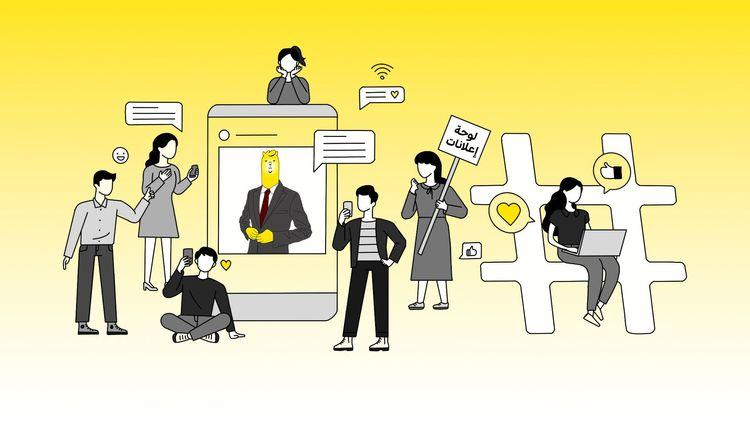
In the GCC and Levant, sharing is often a sign of belonging. People usually repost content that reflects shared values. Faith, family, and national pride are examples, but cultural norms, such as modesty and religious sensitivity, shape what’s “safe” to share; missteps can backfire. This is a core driver behind viral content in the GCC, where cultural fluency often determines whether a post travels or backfires.
Sharing as a Reflection of Group Identity
In the Gulf and Levant, sharing is often less about “me” and more about “us.” According to IXMATI, collectivist cultures, including Arab countries, are group-oriented and people’s self-identity is closely tied to their reference groups. So posting and forwarding can feel like a way to affirm belonging. That’s why content around Ramadan, Eid, family moments, or national pride tends to travel easily: it signals shared values and “I’m one of you.”
This also matches what sharing psychology finds. According to Socialnomics’ article, people often share to define themselves and nourish relationships, and the most-shared categories are heavily family-and-friends driven (e.g., “a family member or friend” at 81% and “family pictures or video” at 80%). And in Saudi Arabia specifically, Bytesfuture notes that Ramadan campaigns can “tap into the collective consciousness” by reflecting cherished tradition, building a sense of belonging and shared identity.

Regional Sensitivities & Values
When you create for MENA audiences, cultural “fit” matters as much as the idea. Viral content usually stays inside the region’s comfort zone around faith, family, and respect — and mistakes can trigger fast backlash.
Honor core values. Platform01 Consulting makes a clear warning: in the GCC, getting the cultural details wrong isn’t a small mistake; it can seriously damage a campaign. Religious beliefs and social traditions are part of everyday life. Ronntorossian makes a similar point more directly on Medium, arguing that campaigns that overlook religion, family, and tradition usually fall flat. In Saudi Arabia, audiences tend to connect more with messages about togetherness, personal growth, and self-improvement, as long as those ideas stay within familiar cultural boundaries.
- Local humor, global caution. Humor performs, but it has borders. A roundup of real missteps in the Daily Journal mentions backlash to a Ramadan-themed Red Bull animation that was criticized as insensitive. The rule of thumb is “keep jokes rooted in everyday life, not sacred practices.”
- Backlash vs. virality. Cultural fluency can flip the result. oca-Cola’s Ramadan “dark iftar” experiment (“Remove Labels”) is designed around the values of empathy and unity during Ramadan. Communicateonline reports Emirates NBD’s Ramadan/Eid filters reached +1.4M unique users in the first 24 hours, exceeding Snapchat’s average share rates for MENA.

Watch Coca-Cola’s Ramadan (Remove Labels) video on YouTube
Brand Takeaway
IIf you want Arab audiences to share your content, don’t lead with specs. You’d better use identity and shared values. Cultural relevance isn’t optional in the GCC, and the biggest common denominators are family, religion, and community.
Here’s what that looks like in practice:
- Lead with Shared Values, Not Just Features: The most shareable campaigns in MENA usually lead with values, not features, things like family, faith, hospitality, and community pride. Almarai’s Ramadan ads are good examples. Their main focus is on the warmth of iftar and the nostalgia of traditional meals, and the product appears naturally in the background. This kind of storytelling, which puts values front and centre, builds trust and feels relatable, making people more likely to engage and share than with a straight “new feature/new flavour” product pitch.

See one of the Almarai’s Ramadan ads on YouTube
- Use Local Language and Imagery: When we use local language and visuals, it will create a feeling of “this is for us.” Saudi audiences usually prefer more traditional wording, while people in the UAE respond better to a modern and international style. Brands like Noon do well because they use casual Khaleeji expressions that feel natural and friendly. Visual details are important too. Things like Arabic calligraphy, local patterns, well-known landmarks, or National Day colours help the content feel culturally familiar. Even luxury brands, such as Rolls-Royce with its Gulf editions, take inspiration from local design. Localisation is about showing that you understand the audience’s world.
- Spark “You Get Me” Moments: To make content spread in Arabic markets, it needs to create that quick “you get me” feeling. The posts people share most are usually about everyday life and real emotions—things like stressful school mornings, family relationships, or the funny way older relatives use WhatsApp. When people recognise themselves in the content, they naturally tag friends and share it. A LinkedIn report also points out that strong content creates a “that’s me too” reaction by reflecting real experiences and challenges of young people, rather than using generic marketing messages.
- Co-create with Local Influencers: Working with local influencers helps brands feel more real and in-step with the culture. The key is to keep the main message the same, but let local creators say it in their own way—adjusting the wording, tone, humor, and visuals so it fits their audience. That way, it stays on-brand without feeling forced or “translated.” For example, a Saudi Ramadan campaign made with a Saudi fashion influencer felt closer to local traditions, so people connected with it more easily.
Lamana’s project “When Mogu Mogu Turned Flavours into Personalities” shows how aligning with cultural cues increases Arabic audience engagement. By humanizing flavours and giving them playful identities, the campaign tapped into humor and character-driven storytelling that felt culturally fluent. The result wasn’t just brand awareness, it was content people enjoyed sharing because it felt light, familiar, and socially “safe” within their circles, a key factor in shareable content in Arabic markets.
Emotional Triggers that Work: Humor, Pride, Nostalgia
Strong emotional marketing in MENA relies on feelings people recognise instantly. Local humor rooted in daily life, moments of national or cultural pride, and nostalgia tied to childhood TV, school life, or Ramadan traditions consistently outperform generic messaging. These emotions don’t just entertain. They invite people to pass content along as social currency.
In the project “Calin Never Makes It to School!” Lamana leaned into a familiar, almost universal moment, morning chaos and family routines, to spark humor and recognition. The story worked because it reflected real-life tension people instantly relate to, making it easy to share with friends who’ve “been there.” It’s a strong example of how emotional marketing in MENA turns daily struggles into highly shareable content.
Humor with a Local Flavour
Humor travels best in Arabic markets when it feels lived-in, not “written for ads.”
- Daily-life comedy wins: Egyptian online humor is often built on satire, remixing, and meme-making that reflects everyday pressure, politics, and social life, creating a shared “folk culture” of laughter.

- Gulf family dynamics are a goldmine: Skits about majlis etiquette, “family group” chaos, or Ramadan routines work because they mirror authentic household rhythms (and viewers instantly tag the right cousin).
- Use slang + emoji + meme grammar: A linguistic study of memes highlights how Arabic/English captions and familiar meme conventions carry humor across audiences.
National & Cultural Pride
Pride content performs when it celebrates identity without feeling like a brand hijack.
- National Days + heritage moments: When you market around national or cultural occasions, ike Ramadan or the UAE’s national holiday, it’s better to lead with meaning, not just visuals like flags and national colours. These moments are usually about shared values: unity, roots, respect for traditions, and also a sense of progress. Brands tend to do better when they tell simple, human stories people recognise. That could be a family coming together, small acts of generosity, everyday hospitality, or the way cultural heritage still fits naturally into modern life.
- Football tournaments amplify pride: When Saudi Arabia was named 2034 World Cup host, people were explicitly encouraged to share moments using #Saudi2034, showing how sport becomes a social-sharing engine for national pride.

- Best practice: Let local voices lead through user-generated content, authentic stories, and community perspectives. When locals are at the centre, the brand feels like a genuine participant in the culture rather than the main headline, building trust and relevance.
Nostalgia & Shared Memory
Nostalgia is a shortcut to emotion, especially for Millennials + Gen Z.
- Ramadan TV is a memory machine in Egypt: Ramadan series became a primary cultural “season” tied to togetherness, especially from the 1990s/2000s onward.

- 2000s throwbacks are booming on TikTok: 2000s throwbacks are booming on TikTok, driven by a strong wave of noughties nostalgia. This trend is generating high engagement, with TikTok itself linking its popularity to users’ desire for comfort and escapism during uncertain times.
- What to remix: In the “What to Remix” section, the most shareable and remixable content is that which taps directly into collective memories and shared audience experiences. Simple moments from old school life, classic dubbed cartoons, nostalgic Ramadan jingles and music, or even stories about family habits that almost everyone experienced easily trigger a sense of nostalgia. Formats like “Then vs Now” are particularly engaging, as they allow the audience to compare changes in time, lifestyle, and values with a smile or a sense of empathy. This type of content is inherently conversation-worthy, encouraging comments and shares, and makes the brand feel like part of a shared, intimate memory rather than just a content creator.

Narrative Formats That Travel
Story-led, platform-native content doesn’t live in isolation, it performs best when integrated across touchpoints. This is especially relevant when paired with How 360° Digital Marketing Builds Brand Loyalty in the Competitive fast-moving consumer goods (FMCG) Market, which shows how consistent storytelling across social, media, and digital experiences reinforces recall and long-term brand affinity.
Stories Over Statements
In Arabic-speaking markets, “shareable” usually means retellable. Instead of product claims, people pass along mini-stories (a situation, a conflict, a punchline, a resolution).
Research on GCC social media advertising notes that narrative-centric ads can boost emotional resonance and engagement compared to traditional product-focused messaging.
A clear example of story-first thinking comes from Lamana’s “15 Seconds. 4 Apps. Infinite Impact.” Instead of listing features, the campaign unfolded as a fast, visual narrative built for short-form platforms. When the message was compressed into a recognisable mini-story optimised for mobile viewing, Lamana applied the psychology of shareable content, making the idea easy to retell, remix, and forward across platforms like TikTok, Instagram, and WhatsApp.
- Relatable skits (family dynamics, workplace moments, “group chat” situations)
POV / confession (“I wasn’t going to… but then…”)
- Problem → tension → payoff (the “small struggle” story: mornings, traffic, iftar rush, school memories)
TikTok’s own guidance pushes a simple rhythm; hook → body → close, using suspense / surprise / emotion early to keep people watching.
Short, Loopable, Subtitled
For short-form in MENA, the “travel-ready” package is: vertical, fast hook, readable on mute, easy to rewatch. TikTok recommends 9:16 vertical, strong hooks in the first seconds, and using captions/text overlays to provide instant context.
Subtitles aren’t just “nice”—they’re infrastructure:
- Instagram explicitly supports closed captions for Reels, so you can build accessibility in without extra tools.
- English-Arabic subtitling is now widespread on Shorts/Reels, but studies also warn that dialect/idiom can break auto-translation. So clean phrasing or human review matters when you want cross-border clarity.
Loop triggers that work, simple but effective:
- Surprise ending that re-contextualizes the first second
- A repeated sound bite / line that feels quote-worthy
- Circular action (end matches the start visually)
- “Wait - did you catch that?” micro-detail (text reveal, fast reaction)

Local Trends & Viral Hooks
The formats that travel fastest are the ones that invite participation:
- Duets & reactions: TikTok’s Duet feature is literally designed for side-by-side responses, perfect for hot takes, “same,” disagreements, and comedic escalation.
- Hashtag challenges: TikTok positions Branded Hashtag Challenges as a participation engine (users create around a prompt), and best-practice guidance emphasises aligning with platform culture and keeping it native.
Seasonal hooks matter a lot in Arabic markets, especially Ramadan. Recent reporting shows audiences increasingly consume Ramadan content via VOD + social, and TikTok itself has expanded episodic Ramadan partnerships (riddle formats, street interviews, comedy talk) built specifically for short-form viewing.

Social Proof & Community Norms
Social Proof & Community Norms explain why people share what feels approved and safe in their circles. In MENA, users are more likely to pass along content that already looks popular, such as high views, trending hashtags, influencer reposts, and that fits the tone of their close communities. A lot of real sharing happens privately, especially in WhatsApp groups and DMs, so content must feel funny, useful, or culturally “safe” to forward.
Share Because “Everyone Else Is”
When content already looks popular, people treat it as “approved.” According to The Decision Lab, we often copy what others do—especially when we’re unsure what’s worth attention.
Influencers magnify this. An arXiv study on repost diffusion found that posts reshared by high-influence users are more likely to be reshared again than those boosted by ordinary users.
Trending hashtags and huge view counts work the same way: visibility becomes credibility.
Private Sharing Is Bigger Than Public
In MENA, sharing happens heavily in private channels like WhatsApp, Telegram, and DMs. Campaign Middle East reports that 76% of users in the Middle East prefer buying from brands that have a WhatsApp presence, showing how central private messaging is.
Private forwarding is also massive on major platforms. People reshare Reels 3.5 billion times daily across Instagram and Facebook.
And private sharing is often recipient-driven. A study by Lottridge & Bentley found that messaging shares are shaped by what fits the recipient’s interests or context.
Role of Micro-Communities
Real virality starts in small circles, family chats, friend groups, and fandom communities. An arXiv study on WhatsApp virality notes that personal groups formed by family and friends dominate activity.
If brand content naturally fits these micro-communities, it spreads like trusted word-of-mouth—not just “public reach.”

Practical Checklist: Building Shareable Creative for Arabic Markets
Social Proof & Community Norms explain why people share content that feels “approved” by their circles. In MENA, users are more likely to share popular posts with high views, trending hashtags, or influencer endorsements. For something to get forwarded, it usually needs to feel “safe” to share, plus either genuinely relatable or simply fun. And the content that spreads fastest is usually the kind that fits naturally into tight circles like family groups, close friends, or fan communities, because it gives people an easy reason to send it on.

Shareability Is Engineered, Not Accidental
In Arabic-speaking markets, the content that travels far isn’t “randomly viral.” It’s built with intention: culturally fluent details, a clear emotional trigger such as humor, pride, nostalgia, and a format that fits the way people actually share,especially through private chats and tight micro-communities. The biggest wins in MENA come from understanding why people pass something on: to signal belonging, to entertain their circle, to celebrate identity, or to relive a shared memory. When a post feels familiar, respectful, and easy to forward, it becomes social currency, not just content.
That’s the real shift. Brands don’t win by shouting louder; they win by sounding closer. And that closeness comes from local language choices, recognisable scenarios, platform-native execution, and creative that’s “safe” and rewarding to share in family groups, friend circles, and fandom spaces.
Lamana helps brands build content that’s not just seen, but spread. From deep local insight such as dialect, humor, cultural timing, to creative systems like formats, hooks, subtitles, platform edits, we design campaigns that move through people, not just pixels. If you want work that audiences choose to share, publicly and privately, Lamana turns strategy into creative that travels.