- Why Dynamic, Modular Creatives Matter
- Static Assets Aren’t Enough Anymore
- RTB Environments Need Variation, Speed & Volume
- Creative = Media Multiplier
- Feed-Based Ads & Offer Logic
- What Are Feed-Based Ads?
- Use Cases in MENA
- Logical Examples
- Location and Time Logic
- Audience and Funnel Logic
- Language Localization (Arabic/English)
- One Ad, Two Languages = Two Experiences
- Best Practices
- Platforms That Support Multilingual Delivery
- Meta (Facebook and Instagram)
- Google Ads
- TikTok
- Creative Pre-Testing & AI Variant Generation
- Don’t Waste Spend on Untested Ideas
- AI-Assisted Variant Building
- Smartly Creative Suite (including Ad-Lib.io)
- Pencil AI
- Automation Across Channels
- Suggested Process for Scaling Creative Variants
- RTB-Specific Benchmarks & Iteration Cadence
- Creative Metrics That Matter in RTB
- How Often to Iterate?
- What to Track in Reporting
- CTR by Audience
- Viewability and Engagement by Placement
- ROAS Lift Versus Control Creative
- Bonus Section: Retail Media + DCO in MENA
- GCC Retail Media Networks = DCO Opportunity
- How to Maximize It
- You Can’t Fix Media Problems With Bad Creative
Creative is the real deciding factor in real-time bidding. Strong RTB creative determines whether your brand wins attention, and platforms reward ads that capture it fast. When your creative is relevant, localized, and built for the moment, costs drop, win rates rise, and performance becomes predictable. When it isn’t, even the smartest media strategy struggles to make an impact. “Media wins auctions. Creative wins outcomes.”
This article explains how dynamic creative optimization in MENA (DCO MENA) helps brands build modular, feed-driven, localized, and continuously tested creative systems that actually perform inside real-time bidding environments.
Why Dynamic, Modular Creatives Matter
Dynamic, modular creativity is essential in MENA’s fast-paced RTB landscape. For brands competing through RTB creative, adaptability is now a performance advantage. This section explains how adaptable creative systems improve auction efficiency, strengthen relevance, and ultimately drive more effective media investment.
Static Assets Aren’t Enough Anymore
One static banner usually doesn’t get very far in RTB auctions. After a couple of impressions, people scroll past it because they’ve already “seen it.” Pixis notes that this repetition tends to pull CTR down and push costs in the wrong direction.
A modular setup works differently. Instead of serving the same design again and again, creative teams can mix and match visual elements on the fly. The ad changes based on the situation, which makes it feel fresher and a lot more relevant to whoever sees it.
This approach to modular creative in MENA underpins Lamana projects such as “15 Seconds. 4 Apps. Infinite Impact.”, where assets are designed to flex across multiple apps and placements.

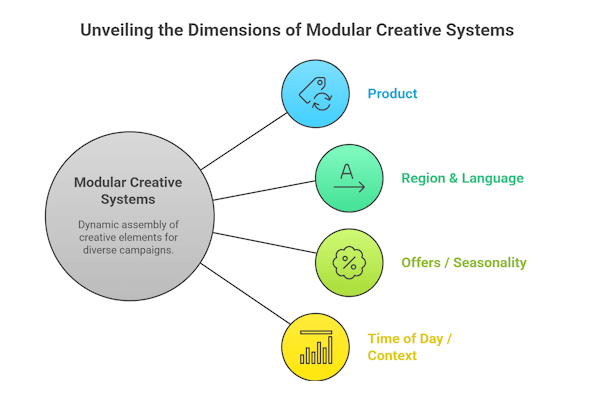
Modular creative systems allow dynamic assembly based on the following factors:
- Product: A retargeting ad automatically pulls items from your product feed and shows people the exact product they viewed, whether it was a specific phone model or a pair of shoes.
- Region & Language: You can run the same visual creative but switch the language depending on the location. For example, English for Dubai and Arabic for Riyadh, or weave in local cultural cues like well-known landmarks to make the ad feel more relevant.
- Offers / Seasonality: Update promotions based on what’s happening at the moment, such as Eid discounts, Ramadan deals, or summer sales. One campaign even boosted CTR by 121% by matching creatives to local iftar times during Ramadan.
- Time of Day / Context: Signals like weather, device type, or even the time of day can shape what the user sees. A basic DCO setup might work as simply as “if it’s raining, highlight the waterproof jacket; if it’s sunny, switch to sunglasses.”
RTB Environments Need Variation, Speed & Volume
RTB platforms push the most relevant asset at each moment. Meta’s auction engine prioritises creative freshness and diversity. LogicalPosition reports that by a fourth exposure, conversions can drop nearly fifty percent, showing how quickly creative fatigue sets in.
TikTok expects brands to keep their ads moving, so instead of relying on one video, most advertisers run three to five different clips in each ad group and rotate them regularly.
Amazon DSP follows the same logic, leaning heavily on feed-based creatives that update automatically with real pricing and stock levels.
Creative = Media Multiplier
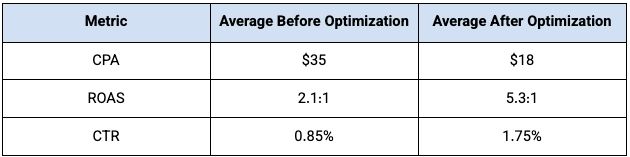
When RTB creative is optimized dynamically, every impression gains more value. Tryholo notes that dynamic ads can double CTR while reducing CPA by around half. Hunch case studies show ROAS increasing more than seventy percent when static creatives are replaced with dynamic templates.
In retail media, DCO has reduced CPA by over thirty percent, according to Admiral Media. Higher relevance boosts auction quality scores too, which translates into lower CPMs and more efficient reach.
Feed-Based Ads & Offer Logic
The following best practices and use cases show how MENA brands leverage feeds to deliver relevant promotions, seasonal bundles, and localized offers across multiple channels.

What Are Feed-Based Ads?
Feed-based creatives use live product data to update images, prices, and details automatically, removing manual work and keeping every impression accurate. The result is an ad system that always matches what’s actually available in the live catalog, without you having to touch a thing.
For readers who want a clearer visual example of how dynamic and feed-based setups work in practice, this short explainer video breaks down the core mechanics of Dynamic Product Ads. It shows how product feeds connect to templates, how the system automatically updates prices and images, and how platforms choose the most relevant item for each user in real time.
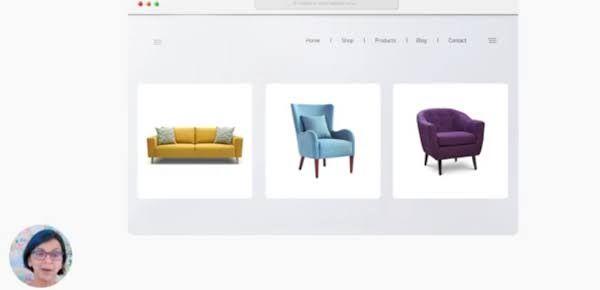
Watch the full video on YouTube
Before diving deeper, it helps to break the core strengths of feed-based advertising into three key areas that shape how these campaigns work at scale.
- Data-Driven Creative Assembly: Feed-based creatives rely entirely on structured data. According to Socioh and Google’s documentation, every part of the ad, including the image, headline, and price, is pulled directly from the product feed.
- Personalization and Scalable Automation: Feeds often contain thousands of SKUs and detailed attributes, which makes large-scale personalization possible. The same article, Socioh says, if a product is listed as out of stock in the feed, ads featuring that item can pause on their own. Google’s support guidelines also note that when a price or promotion changes in the feed, the ads update instantly without any manual redesign.
- Multichannel Dynamic Delivery: Multiple platforms now support dynamic ad delivery built on product feeds. Meta’s Dynamic Product Ads and Google’s dynamic remarketing and Demand Gen campaigns all use real-time product data to show the most relevant item to each user.
Use Cases in MENA
Ramadan remains one of the biggest retail moments in the GCC and wider MENA region, and many stores use product feeds to promote curated bundles. Arab News and LuLu
Hypermarket’s catalog explained that LuLu in Saudi Arabia offered a “Ramadan Essentials Box” with 11 staple items priced at 99 SAR. These bundles are usually built from a dedicated Ramadan feed, so if the price or item list changes, the ads update automatically.
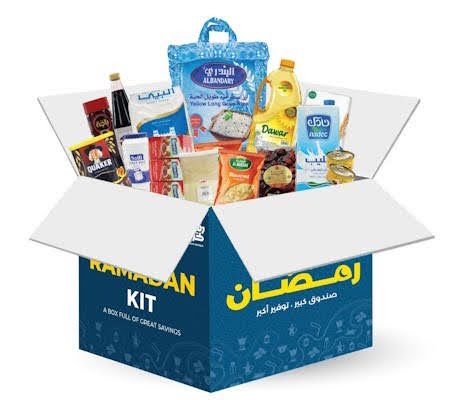
Brands also localize these seasonal promotions. Some UAE retailers adjust Iftar boxes for different cities, offering one version for Dubai and another for Abu Dhabi based on local shopper preferences. Dynamic feeds make this simple by letting retailers maintain a master catalog with city-specific images or prices.
Cross-border retailers rely heavily on multi-country feeds as well. According to ProductSup’s documentation, Facebook’s Localized Ads support country-level overrides so each market sees accurate pricing, currency, and language. A user in the UAE might see AED prices and Arabic text, while a shopper in Saudi Arabia sees SAR and KSA-specific content, all without creating separate campaigns.
Omnichannel pricing strategies in MENA also benefit from feed automation. Omniful shares a nice real-world example from the UAE. In one case, a retailer sold a fragrance in-store for AED
290 and added a small mini as a free extra. Online, the same fragrance cost AED 340 but came with a travel pouch instead.
You see the same pattern around Ramadan and Eid, when online bundles differ from in-store promotions. Feed-based pricing and stock fields allow campaigns to show the right offer based on channel or location automatically. For FMCG brands, this mindset is similar to Lamana’s “When Saffron Built Its Own Media”, where the product and its media ecosystem are tightly aligned around local context and shopper behavior.

Logical Examples
Logical examples show how dynamic feeds and user signals shape real-time creative decisions. These examples illustrate how DCO systems personalize creative on the fly to improve relevance and performance.
Location and Time Logic
Feed-based systems let advertisers match creative to user context. For example, if a user is in Dubai after 6 PM, the platform can automatically show a fast-delivery SKU with a 20% discount.
Using geo-fencing and scheduling, the ad server pulls the right product from the feed, just as DOOH networks adjust content for rush hour, weather, or evening flash-sale moments, like Black Friday.
Audience and Funnel Logic
You can also play with the message based on where people are in the funnel. Someone seeing you for the first time might get a UGC-style video with a bit of social proof to build trust. People who’ve already visited or added to cart are better served with a dynamic bundle or offer pulled straight from the feed.
A real example comes from Viral Agency UAE, where brands use UGC-style videos to engage cold audiences before shifting retargeted users into product and offer-driven creatives.

Watch the full video on YouTube
Language Localization (Arabic/English)
This section explains why running ads in both Arabic and English requires more than simple translation. In the next part, we’ll walk through a few practical tips on how to design, test, and run bilingual campaigns that work across MENA.
One Ad, Two Languages = Two Experiences
Running ads in Arabic and English isn’t just a matter of flipping the words from one language to the other. As Areesto, LatinoBridge, and GMR Transcription point out, literal translation often kills the tone, flattens the humor, or makes the message unclear – and in some cases, it can even feel off or inappropriate in Arabic.
The audiences themselves are also quite different. Arabic campaigns usually talk to locals and more conservative shoppers, while English ads tend to target expats and a more international crowd. That’s why each version needs to be transcreated – the tone, style, and emotion adjusted so the Arabic and English feel native in their own worlds, not like one was just copied from the other.
Best Practices
This section suggests some useful guidelines for creating effective Arabic-language creatives in MENA. It focuses on layout, language, and dialect considerations to ensure ads are both readable and culturally resonant.
- Design for right-to-left (RTL) layout: Arabic reads right-to-left, so layout, alignment, spacing, and navigation must flip accordingly. Proper RTL fonts and clean rendering of mixed text (like numbers or brand names) are essential for a smooth user experience.
- Use separate text fields: Meta’s DLO and Google’s responsive formats let advertisers write separate Arabic and English copy for the same ad. Thus, you’re not squeezing Arabic into an English layout, which helps avoid truncation and keeps each language flowing in its own natural tone and structure.
- Test dialect variants: Arabic dialects vary widely across the region. Testing Emirati, Saudi, Levantine, or other variants, since what works in one market may fall flat in another. Modern Standard Arabic can serve as a neutral option, but local dialects often deliver stronger engagement.

Platforms That Support Multilingual Delivery
Platforms that support multilingual delivery are essential for reaching diverse audiences in MENA. With users speaking multiple languages and engaging across different channels, brands need tools that automatically serve the right creative version to the right user.
Meta (Facebook and Instagram)
Meta supports multilingual creatives through its Dynamic Language Optimization system, which allows advertisers to upload up to six language versions of the same ad. Meta then decides which language to show each user, all within a single ad set.
You can run a single campaign, write separate Arabic and English versions for the headlines, main text, and URLs, and let Meta handle the rest – it serves the right language to each person based on their context.
Google Ads
Google Ads also enables language-based delivery by using signals such as search language, browser settings, and website content to determine what users understand. Language selection currently happens at the campaign level, though the platform is shifting toward AI-driven language detection.
Seoteric reports that manual language targeting will be phased out by the end of 2025. In practice, most advertisers still manage separate campaigns or asset groups per language because Google will not automatically pick the best localized asset for each user, as noted by Lokalise and Seoteric.
TikTok
TikTok offers language-based targeting as well, allowing advertisers to reach users by app language or predicted language preference. TikTok also provides a Multilingual tool that can translate an ad’s audio and captions so viewers receive the creative in their own language.
TikTok’s documentation adds that each ad must match the accepted language requirements of the targeted market, meaning it is often best to use separate ad groups or assets for Arabic and English.

Creative Pre-Testing & AI Variant Generation
Pre-testing is critical for bilingual campaigns, especially when you’re working on Arabic creative, where tone, rhythm, and dialect can make or break the ad. Testing upfront stops you from pouring budget into ideas that were never going to land.
If you try out hooks, value propositions and visuals before launch, then use AI tools to spin out more versions of whatever works, you end up putting only your strongest assets into market. Thus, you can swap them out quickly as fatigue creeps in or costs start to climb.
Don’t Waste Spend on Untested Ideas
RTB can burn through your budget faster than you think, so going live with untested creative is basically gambling. It is a lot safer to try a few versions first, like different thumbnails, hooks, and headlines if you want to see what people respond to.
Even simple A/B tests or quick runs through tools like Facebook Experiments, TikTok’s testing features, or AdEspresso can reveal which ideas are worth putting real money behind and which ones you should quietly retire.
AI-Assisted Variant Building
Modern AI tools now automate creative production at a scale that was unrealistic only a few years ago. A single concept can be transformed into dozens or even hundreds of personalized variations in minutes.
Platforms like Smartly and Pencil use machine learning to reformulate copy, reformat layouts, and adapt assets across languages, placements, and audiences. Smartly’s Dynamic Creative Optimization engine, for example, can produce thousands of variants by adjusting visuals, copy, and layouts for each region or demographic, streamlining the entire RTB workflow.
You can see this in action in Smartly’s KLM demo video, where the platform automatically generates and adapts creative variants based on destination, pricing, and traveler context.

Smartly Creative Suite (including Ad-Lib.io)
Smartly provides an AI-powered production system where one master concept can generate complete cross-channel creatives. Smartly “saves 42 minutes every hour” by removing manual formatting work.
Its DCO engine localizes creative automatically, generating Arabic and English versions and resizing assets for TikTok vertical video, Instagram square, or DV360 display. Smartly’s Creative Predictive Potential also flags weak visuals before launch and suggests edits that improve attention and clarity.
Pencil AI
Pencil, besides Smartly, allows marketers to generate ads conversationally. From a short brief, the system produces full variations with headlines, copy, and images or video. Trained on over one billion dollars of ad spend, Pencil predicts expected performance and scores each variant. Some brands have used it to scale from a handful of ideas to more than a thousand creative options in a short timeframe.
Automation Across Channels
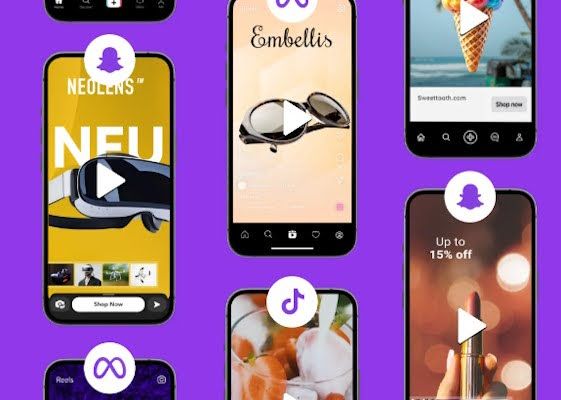
Smartly integrates with Amazon DSP, DV360, Meta, TikTok, and other RTB environments, allowing AI-generated assets to deploy instantly. Product feeds can populate video templates, and videos can be auto-resized to 16:9, 1:1, or 9:16 with updated captions, dramatically accelerating testing cycles. You can view the full demo through the link below.
Suggested Process for Scaling Creative Variants
AI tools have made it pretty easy to spin a bunch of versions from one core idea – ten, twenty, sometimes more. You can run those through something like VidMob’s Creative Analytics or PlaybookUX to see which hooks and value props actually land.
After you know which versions actually hold up, most teams only put a few of them into the real campaign - usually three or four per audience group across Meta, TikTok, or DV360. From there, a tool like Smartly can watch for early signs of fatigue or rising CPMs and make small adjustments on its own, swapping visuals or updating copy so the campaign keeps running smoothly without constant manual fixing.
RTB-Specific Benchmarks & Iteration Cadence
Creative performance in RTB is measured through engagement and fatigue signals. Creative CTR is a key indicator: strong CTR shows the message resonates, while declines suggest burnout. CTR can drop by half within weeks if assets aren’t refreshed, underscoring how quickly creative loses impact.
Creative Metrics That Matter in RTB
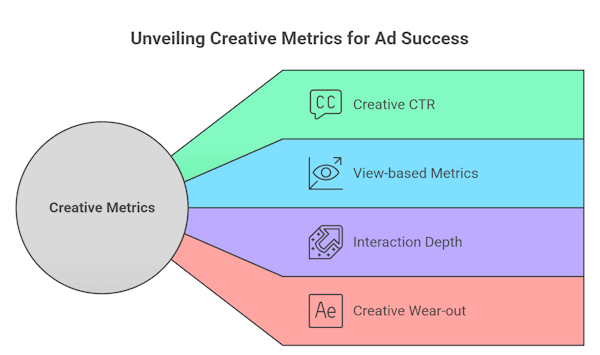
In programmatic RTB campaigns, creative performance is tracked through a set of engagement and fatigue indicators that reveal how long an asset can keep delivering value. In the following, three core metrics are thoroughly explained.
- Creative CTR: measures the click-through rate of each individual asset. Strong CTR indicates the message is landing, while a steady decline often signals fatigue. Some analyses show CTR can drop by half within a couple of weeks if new assets are not introduced, highlighting how quickly performance can erode.
- View-based metrics: time-in-View captures how long an ad remains on screen, a measure AdPushup links closely to recall and user attention. Scroll-Stop Rate is another useful signal, especially for feed and short-video formats. A high SSR shows the opening frames or visuals are strong enough to pause a user mid-scroll.
- Interaction depth: Beyond simply grabbing attention, RTB teams pay close attention to how far users go once they’ve stopped. Swiping through a carousel, clicking around product cards in a DPA, or tapping through a story sequence all reveal how interested someone actually is.
- Creative wear-out: Mountain’s case study shows that once a single creative has been served somewhere around one to one-and-a-half million times in a week, it usually starts to burn out. High-frequency formats like TikTok or Instagram Stories can wear down even faster, sometimes in just seven to ten days. The message is straightforward:
RTB moves quickly, and your creatives have to rotate just as fast if you want to keep performance steady.
How Often to Iterate?
In high-frequency markets like the UAE and KSA, prospecting ads should refresh every two weeks, retargeting assets should rotate after roughly 1.2 - 1.5 million impressions, and UGC or video creatives need new hooks about every ten days.
- Prospecting campaigns: Prospecting ads exhaust their novelty quickly in high-frequency markets like the UAE and Saudi Arabia, so they should be refreshed roughly every one to two weeks. Prospecting creative far more often than other campaign types. Socialeum’s analysis of more than fifty SMB campaigns found that refreshing ads on a two-week cycle consistently lowered costs and improved performance.
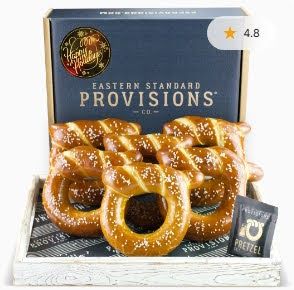
- Retargeting campaigns: Retargeting audiences can tolerate slightly higher frequency, but even here, creative fatigue appears once total impressions reach around one to one-and-a-half million. Teams typically monitor CTR and CPA for early signs of decline and plan a creative swap once cumulative exposure crosses that range. The Mountain Article shared an example where an advertiser refreshed creative after about 1.2 million impressions to keep performance from slipping. Eastern Standard Provisions, a provider of gift boxes featuring artisanal pretzels and snacks, built a creative refresh plan to ensure that their message remained fresh during the holidays.
- UGC-style / Video ads: Short-form video and UGC-style creatives wear out the fastest. Their performance depends heavily on the opening seconds, so new hooks are often tested every seven to ten days. Entasher’s 2025 UGC playbook recommends refreshing full video assets every ten to fourteen days for conversion campaigns and rotating hooks on a bi-weekly cadence to stay ahead of fatigue.
What to Track in Reporting
This section breaks down the creative metrics that actually matter in reporting _ how CTR changes across audiences, how different placements affect engagement, and how much lift your best-performing assets deliver compared to your control creatives.
CTR by Audience
Tracking creative CTR by audience segment helps reveal which visuals resonate with specific groups. By watching how CTR rises or falls across demographics or interest clusters gives insight into whether a creative is gaining traction or fatiguing within that subgroup. These trends often guide which assets to scale and which to retire.
Viewability and Engagement by Placement
Evaluating creatives by placement is equally important. It also helps to look at how each creative performs by placement. When you compare viewable impressions with clicks, video views, or expansions, you can quickly spot when an ad does not fit the environment.
For example, if a placement gets plenty of views but almost no interaction, that’s a clear sign the format and creative aren’t a good match.
ROAS Lift Versus Control Creative
A/B testing should go beyond surface-level metrics and show the real business impact of a creative. The clearest way to do that is by comparing ROAS against a control asset so you can see exactly how much lift the stronger version delivers.
One example shared by the Entasher Article involved a UGC-style challenge that boosted conversions by thirty-eight percent and outperformed the brand’s usual creative on ROAS. When you track results this way, it becomes much easier to focus on the assets that actually move revenue instead of those that only look good on engagement charts.
Bonus Section: Retail Media + DCO in MENA
Retail media networks in the Gulf have become ideal environments for DCO for GCC, combining live pricing, automation, and shopper behavior signals. This section highlights how fast-growing Gulf retail media networks enable true DCO inside shopper moments, and explains how to maximize results by syncing product feeds, supplying multiple creative formats, and localizing offers for each retailer and country.
GCC Retail Media Networks = DCO Opportunity
Retail media networks across the Gulf are creating powerful new spaces for dynamic creative optimisation. Precision Media, the retail media arm of Majid Al Futtaim, has rolled out AI-powered screens inside Carrefour stores and connected them to digital behavior, allowing brands to reach shoppers across the full path to purchase.
Majid Al Futtaim’s setup blends in-store attention with online signals, giving advertisers real DCO moments at the point of sale. Amazon DSP is also expanding its capabilities in the region. Its Responsive e-Commerce Creative (REC) format now operates in both Saudi Arabia and the UAE, letting advertisers upload multiple headlines and images so the system can dynamically assemble the best-performing variant.
The result is a shift from generic programmatic optimisation to real retail-moment optimisation inside Gulf retail ecosystems.
How to Maximize It
The following steps outline how to maximize DCO performance within Gulf retail media networks.
- Sync product feeds with dynamic templates: To get the most out of DCO in retail media, the product feed has to be plugged directly into the system. With Amazon’s REC format, for instance, the platform reads live ASIN data such as pricing, stock levels, current deal, and builds the creative on the fly. As a result, every impression shows information that is actually up to date, rather than a static offer that went stale days ago.
- Build multi-format creative libraries: Retail media across the GCC spans on-site banners, in-app feeds, and in-store digital screens. Supplying static images, short videos, and carousels gives the DCO system more flexibility to test what works in each placement. Precision Media’s Carrefour network stresses that this omnichannel mix helps the AI pick the right asset for each moment.
- Localize copy and offers by country and retailer: Retailers often operate differently across markets, even when the brand name is the same. Noon UAE (United Arab Emirates) and Noon KSA (Saudi Arabia), for instance, carry different SKUs, run different promotions, and use different languages and currencies. Treat each retailer-country pair as its own creative environment. Localized headlines, price points, currencies, and feed rows allow the DCO system to select the right variant for each shopper in each market.
You Can’t Fix Media Problems With Bad Creative
Creative quality is ultimately what determines whether RTB works. RTB only works if the creative is strong. In places like Saudi Arabia and the United Arab Emirates, the brands that keep winning auctions are usually the ones with ads that grab attention right away and feel relevant to local viewers. When the creative fits the moment and the culture, the auction system naturally gives it more weight.
Keeping that level of performance going isn’t about producing one good campaign and stopping there. It takes steady updates - breaking creative into flexible pieces, adjusting it for each market, and testing new versions often.
This is exactly the approach behind Lamana’s work on “When Your Cheeks Smile, You Know It’s Right”, where creative was engineered to adapt across platforms, and “When Mogu Mogu Turned Flavors into Personalities,” which used audience-specific storytelling to drive retail engagement.
This kind of creative system not only improves short-term performance but also builds stronger loyalty over time. At Lamana Digital Marketing Agency, we help brands win programmatic performance through creative that’s built for the bid.
Also, we build creative systems designed for RTB reality; dynamic, locally resonant, and engineered for measurable performance at Lamana. For brands competing in MENA’s most advanced programmatic markets, this is how you win auctions and convert attention into real outcomes.